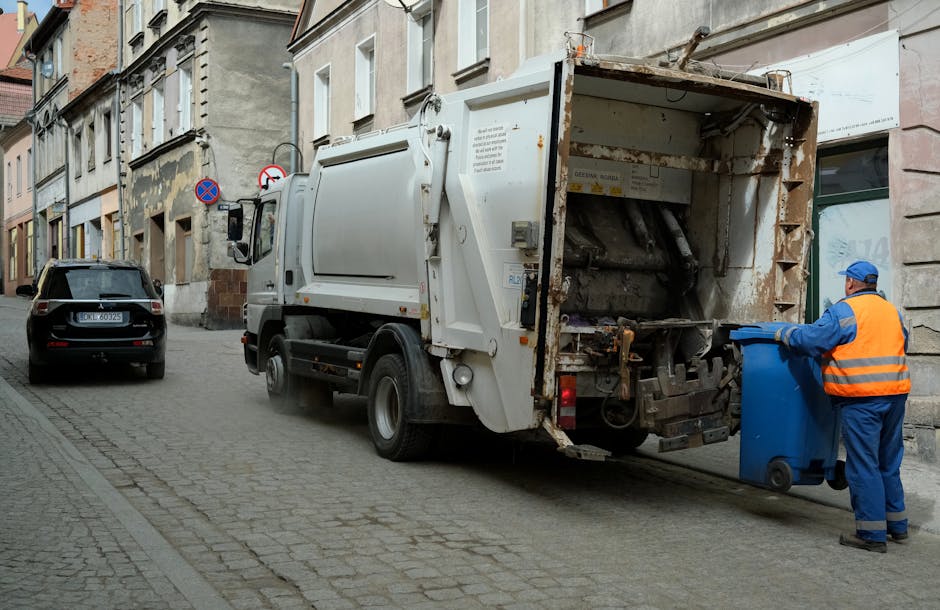
Permits and skips for Sydenham removals and clearouts
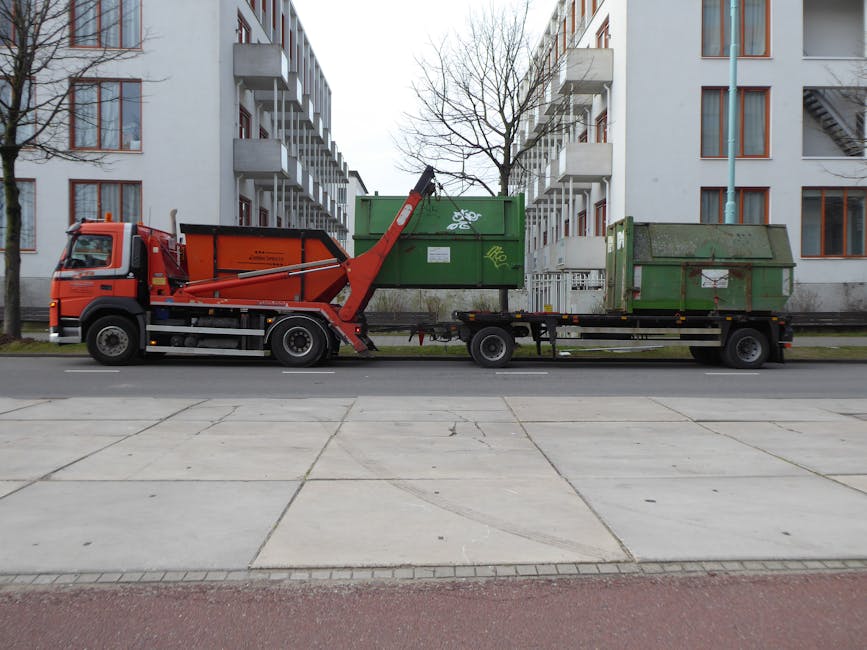
If you are planning a move, house clearout, flat tidy-up, or bigger declutter in SE26, the boring bits can quickly become the bits that derail the day. Permits, skip placement, parking space, access, neighbours, timing... it all sounds a bit much until you are standing in a hallway full of boxes or old furniture wondering where the waste is actually meant to go.
This guide explains Permits and skips for Sydenham removals and clearouts in plain English. You will learn when a permit might be needed, how skips are usually arranged, what to think about before booking one, and how to avoid the classic mistakes that cause delays or extra costs. We will keep it practical and local, because that is what matters when you are trying to get things done without turning the street into a small obstacle course.
Why Permits and skips for Sydenham removals and clearouts Matters
In a busy London area like Sydenham, removals and clearouts are rarely just about lifting and loading. Space is tight. Kerbside access can be awkward. Streets fill up fast. And if you are using a skip, the practical question is not just where will it sit? It is also is it allowed to sit there at all?
That is why permits matter. A permit can be the difference between a tidy, well-run clearout and a stressful morning where the skip lorry arrives, but there is nowhere legally usable to place it. The same goes for parking, loading bays, and front-garden placement. If you ignore the setup, the waste still needs to go somewhere, and suddenly you are paying for time, re-delivery, or a rushed workaround. Nobody enjoys that. Not even a little.
For removals specifically, permits often matter because the vehicle needs access close to the property. For clearouts, skips are often chosen because they let you gather bulky waste over a few hours or days rather than loading everything at once. The trick is matching the right method to the job, the street, and the amount of waste.
If your move or declutter is part of a wider planning process, it also helps to think ahead about packing and timing. A well-packed load reduces the number of journeys and wasted minutes, which is why some people start with package your items and wait for us to come rather than leaving everything loose until the last minute. It sounds simple, but it saves stress.
How Permits and skips for Sydenham removals and clearouts Works
At a practical level, the process usually follows a few steps. First, you decide what needs moving and what needs disposing of. Then you work out whether the waste can go into a skip, whether a removals vehicle needs loading access, and whether any part of the plan will use public highway space.
That last bit is where permits usually enter the picture. A skip placed on a public road or pavement normally needs permission from the relevant local authority. Private land is different, of course, but in Sydenham many homes, flats, and narrow frontages make private placement difficult. If the skip cannot go on your property, the street becomes the obvious fallback, and that is exactly where checking permissions matters.
There is also the practical side of timing. A removals team may need to park close enough to carry furniture safely, while a skip may need to arrive before the bulky waste is ready. If your day includes both, the sequence matters. You do not want a skip blocking access before the van has finished unloading. That sounds obvious, but it is one of those things people only notice once the job has started and the gate is already open.
In a straightforward setup, the flow looks something like this:
- Assess the volume and type of items to remove or dispose of.
- Check whether a skip, a van load, or a mix of both makes sense.
- Confirm whether the skip will sit on private land or the public road.
- Arrange any permit needed before the skip arrives.
- Plan vehicle access, loading times, and neighbour-sensitive timing.
- Complete the clearout or removal, then arrange collection or final disposal.
For people who want the items moved first and handled in a controlled way, it can be useful to work with a service that manages the loading rhythm for you. The page on best-time delivery planning is a helpful reminder that timing is not just convenience; it is part of making the logistics work cleanly.
Key Benefits and Practical Advantages
When permits and skip planning are handled properly, the benefit is not just compliance. It is momentum. The day keeps moving. People know where to stand, what goes where, and which vehicle is arriving when. That matters more than it sounds.
- Cleaner site management: Waste is contained rather than scattered in the hallway, front garden, or kerbside.
- Less back-and-forth: A well-sized skip or a properly timed removal van reduces repeated trips.
- Safer lifting: Clear space means fewer trips, fewer awkward twists, and less chance of damage.
- Better neighbour relations: Controlled timing and proper permits reduce complaints and avoidable frustration.
- Lower disruption: The job tends to finish faster when the access plan is sorted upfront.
There is also a financial angle. People sometimes assume the cheapest option is the one with the lowest headline price. In reality, a poor-access job that needs re-delivery, extra labour, or a last-minute permit scramble can cost more than planning properly from the start. We have seen that happen enough times to be cautious about it.
For people clearing bulky furniture, it can also make sense to think about storage or staged movement rather than forcing everything out in one go. A useful starting point is storage in Sydenham if the clearout is part of a bigger change and you need breathing room between removal and final disposal.
Who This Is For and When It Makes Sense
This topic is not only for big house moves. It is relevant to a lot of everyday situations in Sydenham and nearby SE26 streets.
You will probably need to think about permits and skips if you are:
- clearing out a flat with limited access or no lift
- emptying a house after renovation or refurbishment
- disposing of mixed household waste, furniture, and packaging
- moving office items or stock from a small premises
- dealing with a last-minute clearout before a tenancy ends
- handling a bereavement clearance and need a respectful, organised approach
- trying to avoid repeated car trips to the tip with heavy items
It makes sense for homeowners, landlords, tenants, letting agents, and small businesses alike. A student flat on an upper floor is a very different job from a family house clearout, but the same logistical rule applies: if the access is awkward, you need a plan that respects the street and the property.
If you are dealing with stairs, narrow corridors, or shared entrances, it is worth reading up on the realities of difficult access. The article on common problems moving into Sydenham flats with stairs gives a good sense of why access planning matters more than people expect.
Step-by-Step Guidance
1. Separate what is moving from what is being thrown away
Do this first. It saves confusion later. One pile for keep, one pile for donate, one pile for waste, one pile for items that need specialist handling. If you mix everything together, the day becomes slower and messier. Simple as that.
2. Measure the real amount of waste
People often underestimate how much space old furniture, dismantled units, broken boxes, and packaging will take up. A single sofa may not sound like much until you try to remove it through a tight staircase with a landing that turns sharply. That is the moment where accurate planning suddenly feels very important indeed.
3. Check where the skip can legally sit
Private driveway or garden? Great, if the dimensions allow it. Public road or pavement? Then permit checks become relevant. If there is no sensible legal placement, a skip may not be the right answer at all. In that case, a phased removal or collection-based plan may be cleaner.
4. Confirm timing before the skip or van arrives
One of the most common problems is timing mismatch. The skip turns up before the clearout is ready, or the van arrives before the building access is cleared. A few phone calls and a clear loading order prevent most of that. You do not need a military schedule, just a sensible one.
5. Build in loading space and walking room
Even when a skip or van is close by, you still need room to move safely. Paths should stay clear. Doorways should not be blocked. If people are carrying heavy items, there needs to be enough space to turn and set things down. A tight fit is not just inconvenient; it is where accidents happen.
6. Confirm disposal expectations
Not everything belongs in the same waste stream. Some items need separate handling, some should be recycled where possible, and some should be removed whole rather than broken up. If you are unsure, ask before the day starts. It is much easier to plan than to sort a pile at the kerb while everyone is already tired.
Expert Tips for Better Results
After enough removals and clearouts, you start noticing the same patterns. The jobs that run smoothly usually have one thing in common: the decision-making happened early, not in the middle of the chaos.
- Book access first, waste second. A clear plan for parking and placement often matters more than the removal itself.
- Choose the right size approach. Too small means repeat effort. Too large means wasted space and possibly higher cost.
- Keep the load sorted. Recyclables, general waste, and reusable furniture should not get tangled up unless absolutely necessary.
- Protect floors and walls. If a hallway is tight, use coverings. A scrape on a painted wall is a tiny thing that becomes annoying very quickly.
- Leave a buffer for the unexpected. Old wardrobes, stripped screws, hidden damp, or awkward lifts can change the plan. They always seem to appear just when tea would have been nice.
A small but practical tip: if you are clearing out before a move, pack the items you know you want to keep separately and clearly label them. That way, if the van arrives before the skip is filled, the must-keep items are not caught up in the disposal zone. It sounds basic, and it is. But basic done well is often what saves the day.
For people who are making heavier moves alongside a clearout, the advice in safe solo lifting techniques is a useful reminder not to underestimate awkward items.
Common Mistakes to Avoid
Some mistakes come up so often they almost feel traditional. That does not make them any less avoidable.
- Leaving permit checks until the day before. That is how people end up stressed and improvising.
- Booking a skip without checking access width. If the vehicle cannot place it safely, you lose time straight away.
- Assuming a kerbside spot is automatically fine. It often is not. Always confirm.
- Filling the skip with mixed items you later need to separate. Sorting after the fact is slower and less tidy.
- Forgetting about neighbours and foot traffic. Shared entrances and residential streets need a bit of consideration.
- Trying to combine too many jobs into one tight time slot. The plan may look efficient on paper, but the real world has stairs, traffic, and people answering phones.
One more thing. Do not assume that a quick clearout means a careless one. You can be fast and orderly at the same time, if the process is planned sensibly. That is where good logistics beat brute force every time.
Tools, Resources and Recommendations
You do not need specialist equipment for every job, but a few basic tools make the process far less painful.
- Tape measure: useful for checking skip fit, doorway widths, and van access.
- Marker pens and labels: for sorting keep, donate, recycle, and dispose.
- Heavy-duty gloves: especially helpful for rough waste or sharp edges.
- Protective floor coverings: worth having in flats, shared hallways, and stairwells.
- Furniture straps or sliders: helpful for awkward bulky items.
- Clear bags or boxes: ideal for small loose waste so it does not spread everywhere.
From a planning perspective, it helps to use a realistic route through the property before anything is moved. That means checking where the skip or vehicle will sit, where people will carry from, and whether there is a turning point halfway through. If that sounds a bit fussy, fair enough. But fussy is sometimes what makes a job calm.
It can also help to compare the removal and clearance options available to you. The company's services overview is useful when you are trying to understand how different jobs fit together rather than seeing them as separate little tasks.
Law, Compliance, Standards and Best Practice
This is the section where people often want certainty, but the honest answer is that local rules can vary depending on the exact location, the council area, the road, and the type of placement. So the safest approach is to treat permits as something to verify early rather than something to guess.
In the UK, the general expectation is straightforward: if a skip is placed on a public highway, the placement usually needs permission. Waste should be handled responsibly, and the party arranging the skip or clearance should make sure it is collected and disposed of lawfully. If a van needs to stop on a restricted road, parking and loading rules may also come into play. That is why local parking guidance matters so much during removals.
Best practice is to keep everything documented in simple terms: where the skip will go, when it will arrive, who is responsible for collection, and whether any access restrictions apply. If you are using a removals company, ask them to talk you through the access plan before the day. A good provider will not mind that question. In fact, they should welcome it.
For safety-minded planning, the company's health and safety policy and insurance and safety guidance are the sort of pages that reassure you the job is being approached properly, not just quickly.
And if the clearance is part of a move that includes parking-sensitive streets, it is worth reading local parking rules for Sydenham removals before the day arrives. That one small bit of homework can save a surprising amount of friction.
Options, Methods, or Comparison Table
There is no single best answer for every Sydenham removal or clearout. The right choice depends on waste volume, access, urgency, and how much lifting you want to manage yourself.
| Option | Best for | Strengths | Limitations |
|---|---|---|---|
| Skip on private land | Homes with a driveway or front space | Simple, flexible, good for ongoing loading | Only works if there is enough space |
| Skip on public road with permit | Properties with no private frontage | Practical for larger clearouts close to the property | Needs advance permission and careful placement |
| Removal van with loading | Furniture moves, mixed item removal, tight schedules | Fast, direct, less mess outside the home | Requires access and coordinated timing |
| Combined approach | Big moves with bulky waste and keep items | Very efficient when planned properly | More moving parts to coordinate |
In real life, the combined approach is often the winner for larger jobs. The van handles the furniture and priority items, while the skip takes the waste that would otherwise clog the hallway. That said, if the street access is difficult or the timeframe is tight, a simpler plan may be better. Sometimes less is more. Annoying, but true.
If you are leaning toward a van-based solution rather than a skip-led clearout, it may help to look at man and van support in Sydenham or removal services in Sydenham depending on the scale of the job.
Case Study or Real-World Example
Picture a typical SE26 flat clearout. Two bedrooms, a boxed-up loft of old paperwork, one battered sofa, a mattress, a few shelves, and a growing pile of general clutter that has been quietly living rent-free for years. The building has stairs, the street is narrow, and there is no convenient private place to drop a skip.
In that situation, the obvious mistake is to start moving items before deciding where the waste is going. A better approach is to split the job into clear streams. Furniture to be moved or removed directly. Breakable or reusable items boxed separately. General waste identified in advance. Then, if a skip must sit on the road, the permit issue is checked before delivery rather than after the lorry is already en route.
What usually makes this kind of job run well is the order:
- Measure access and identify the carrying route.
- Decide which items are going with the removals vehicle.
- Set aside waste for the skip.
- Confirm whether the skip can be placed on private land.
- Arrange permit and timing if public placement is needed.
- Load in stages so the hallway stays usable.
That is the difference between a chaotic clearout and a controlled one. The room starts out looking like a jumble of random life admin, and by late afternoon it feels like progress has actually happened. Not glamorous, but satisfying.
For furniture-heavy jobs, you may also find furniture removals in Sydenham helpful when separating what should be reused, moved, or cleared away.
Practical Checklist
Use this before booking or on the day itself.
- Measure the access route from property to street
- Confirm whether the skip will be on private or public land
- Check permit needs early if the road will be used
- Separate keep, donate, recycle, and dispose piles
- Label anything that must not be taken
- Plan where the van or skip will park or sit
- Protect floors, corners, and communal areas
- Keep stairways and doorways clear
- Decide who is responsible for final collection
- Build in a little extra time for unexpected awkward items
If you are working through a larger move as well as a clearout, useful prep can begin with a good packing routine. The guidance on packing and boxes in Sydenham is a solid reminder that a tidy pack makes everything else easier.
And if the job is time-sensitive, a focused service like same day removals in Sydenham may suit better than stretching the job across several awkward mini-sessions.
Conclusion
Permits and skips for Sydenham removals and clearouts are not the glamorous part of moving or decluttering, but they are the part that makes the rest possible. Once access, placement, and timing are sorted, the job feels lighter almost immediately. Less standing around. Less second-guessing. Less clutter in the way of the actual work.
The main thing is to treat permits, parking, and skip placement as part of the plan, not an afterthought. That approach protects your time, your budget, and your nerves. And to be fair, nerves are usually the first thing to go when a flat is full of boxes and the lift is out of service.
For a smoother result, keep the access plan simple, confirm the logistics early, and choose the method that fits the property rather than forcing the property to fit the method. That is usually how the best jobs stay calm.
Get a free quote today and see how much you can save.
And if you are still mapping out the move or clearout, it can help to talk it through early rather than leaving the messy bit until the last minute. A little planning now often saves a very long afternoon later.
Frequently Asked Questions
Do I always need a permit for a skip in Sydenham?
No, not always. If the skip sits entirely on private land such as a driveway or private front area, a permit may not be needed. If it needs to go on a public road or pavement, permission is usually required. The key is to check the exact placement before booking.
Can a removals van use the same permit as a skip?
Not necessarily. Skip permits and parking or loading arrangements for a van are different things. A skip is static waste storage, while a van is a vehicle that stops to load or unload. Both may affect the street, but they are not always handled the same way.
What if there is no space for a skip outside my property?
Then a skip may not be the best option. In many Sydenham homes and flats, limited frontage or tight streets make van-based removal, staged clearout, or a smaller waste strategy more practical.
How far in advance should I arrange permits and skips?
As early as you can. The earlier the better, especially if your road is busy, access is tight, or your job needs to happen on a specific day. Leaving it too late is where most problems begin.
Are skips better than multiple van loads for a clearout?
It depends on the job. Skips are useful when you have mixed bulky waste and need a place to keep loading over time. Multiple van loads can work better if access is straightforward and you want items removed immediately. There is no one-size-fits-all answer.
What items should not go into a skip?
That depends on the skip provider and waste rules, but in general some items need separate handling. It is always best to ask before loading anything that might need special treatment, such as electrical items or restricted materials.
How can I avoid delays on moving day?
Measure access, check parking, confirm where the skip or van will sit, and label everything clearly. Delays usually come from unclear access, not the lifting itself. A little preparation goes a long way.
Is a same-day clearout realistic if I need a permit?
Sometimes, but it depends on timing and availability. If the permit or placement is not sorted, same-day plans can become awkward fast. In a rush, it is often better to use a removal-based approach than to force a skip-led solution.
Can I combine a house move with a clearout in one day?
Yes, and many people do. The trick is separating keep items from waste before anything starts moving. If you mix both together, the day becomes slower and the risk of mistakes goes up.
What should I do if my clearout includes heavy furniture?
Set those items aside early and decide whether they will be moved, stored, or removed. Heavy furniture needs different handling from bagged waste, and it is often safer to deal with it as a separate part of the plan.
Do flats in Sydenham need a different approach from houses?
Usually, yes. Flats often have stairs, shared entrances, less outdoor space, and more pressure on timing. That means the access plan matters even more than in a house.
Where should I start if I feel overwhelmed?
Start by sorting the items into three piles: keep, move, and clear. That one decision makes the rest easier. Then check access and decide whether you need a skip, a van, or both. One step at a time. That is usually enough.